MCP for Codex
Give OpenAI Codex the power to act through MCP. UniversalBench is a hosted MCP server, so instead of running a server per tool, you add one entry to your Codex config and it can run code, search the live web, read and write databases, commit to GitHub, work with files, and more, with safety built in.
Add the MCP server to Codex
Open your Codex config
Open ~/.codex/config.toml, the OpenAI Codex CLI configuration file.
Add the UniversalBench server
Add the entry below. The mcp-remote bridge connects the hosted server and works on every Codex version.
Save and restart Codex
Save the file and restart Codex so it loads the server. You can also run codex mcp add to do this from the command line.
Ask in Codex
Ask in plain language. Codex can now run code, query databases, search the web, commit to GitHub, and more.
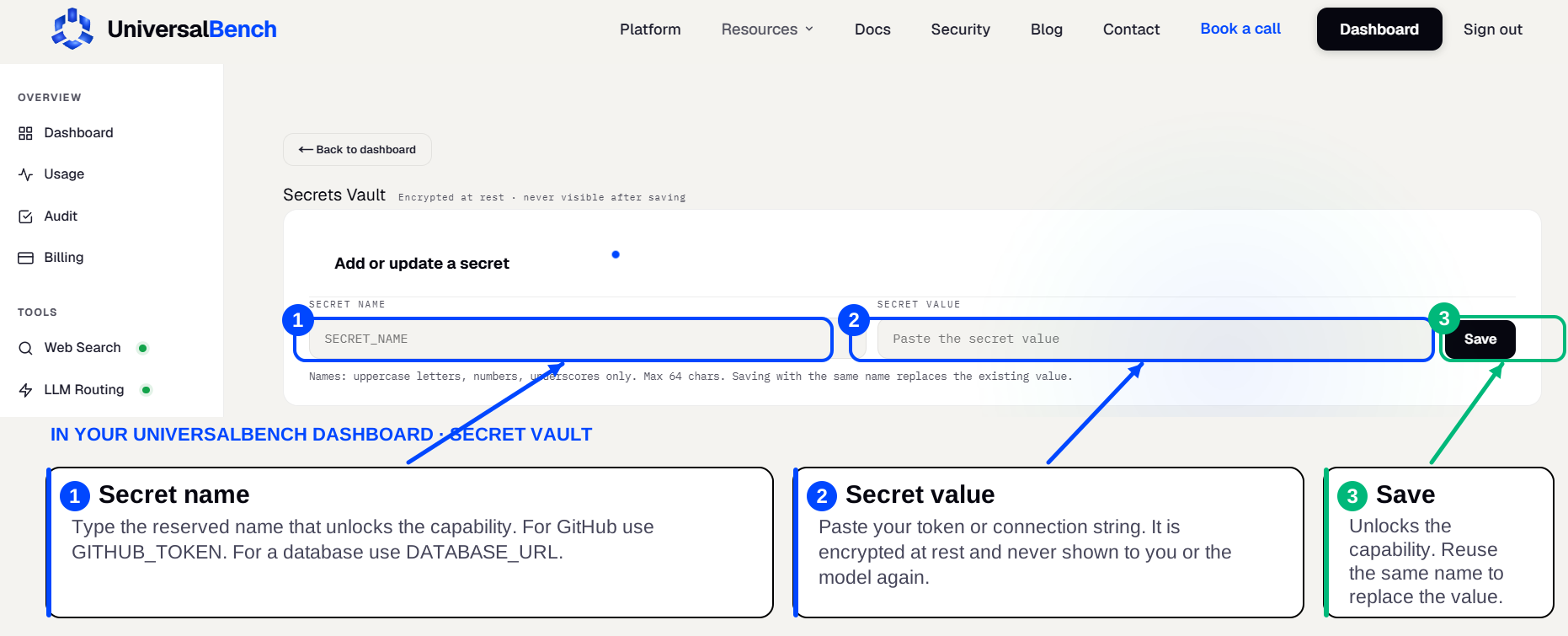
Your secrets live in an encrypted secret vault
When a capability needs a credential, a GitHub token, a database URL, an API key, you save it once in your secret vault. You enter the secret name on the left and the secret value on the right, then save. Codex never sees the value, it is never shown in the chat, and the matching capability unlocks automatically.
What Codex can do once connected
GitHub
read repositories and commit validated code changes
Slack
post messages and read through the Slack API
Postgres
query and update any PostgreSQL-compatible database
Notion
read and update Notion pages and databases
Filesystem
read, write, convert, and analyze files in an isolated sandbox
Web Search
search the live web and return processed results
Google Sheets
read and update Google Sheets
Gmail
read and send Gmail
One hosted server beats wiring up many
Most MCP servers do one job and you run each one yourself. With UniversalBench you add a single hosted server to Codex and every capability is there, so there is nothing to install per tool, nothing to keep running, and your secrets sit in an encrypted secret vault instead of scattered across config files.
| Many self hosted servers | UniversalBench | |
|---|---|---|
| Setup in Codex | One entry per tool | One entry |
| Maintenance | You keep each running | Hosted for you |
| Coverage | One tool per server | 20+ capabilities |
| Secrets | In config files | Encrypted secret vault, never shown |
Frequently asked questions
How do I add an MCP server to Codex?
Open ~/.codex/config.toml, add a server under [mcp_servers] (the mcp-remote bridge connects the hosted UniversalBench URL), then save and restart Codex. On recent Codex you can enable the RMCP client and use a url entry directly.
Is Codex the same as ChatGPT?
No. Codex is OpenAI's coding agent, configured through its CLI and IDE. The ChatGPT app connects MCP servers a different way, through custom connectors in developer mode. If you want that, see ChatGPT MCP.
Does it work with other AIs too?
Yes. The same hosted MCP server works with Claude, Cursor, Gemini, ChatGPT, and any MCP-compatible AI.
